Finding the right creators shouldn’t take years of experience


About 20,000 games were released on Steam last year. To pick the right creators for your game, you first need to know which of those games are actually like yours, and then which creators play them well. Nobody can keep track of that by hand.
Today, picking creators usually works like this. You know your game and a few games that are like it. You find creators who played those, open their channels, go back through months of streams and try to work out whether their viewers stayed when they played something similar. Doing that properly for one creator, two years back, takes hours. For a campaign with a hundred creators it takes weeks, and most teams don’t have that time, so they end up going by follower counts and the names they already know.
The analytics exist. There are good tools out there, and we think ours is the best one. But a tool full of numbers still expects you to know what to look for, and that knowledge takes years to build and sits in the heads of a few people.
The biggest problem we see in influencer marketing is relevance: finding the creators whose viewers will actually care about your game. More dashboards won’t fix that. We think the judgement itself, the part that has always needed years of experience, should be done by data and tech.
That’s why we built AI matchmaking. Studios and publishers have been using it in our closed beta since March, and from today it’s open to everyone on Lurkit.
How it works
- Pick a goal. Reach as many people as possible, reach players who haven’t played your game yet, or bring back the players you already have.
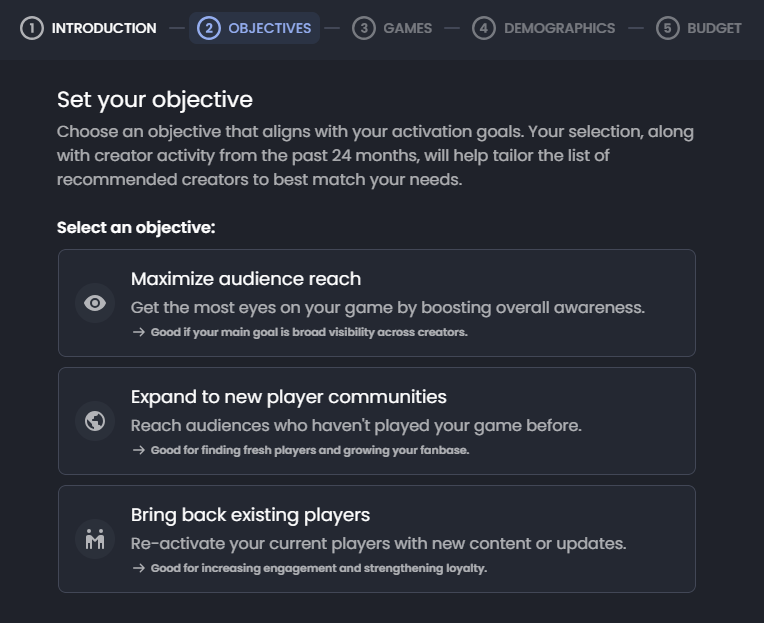
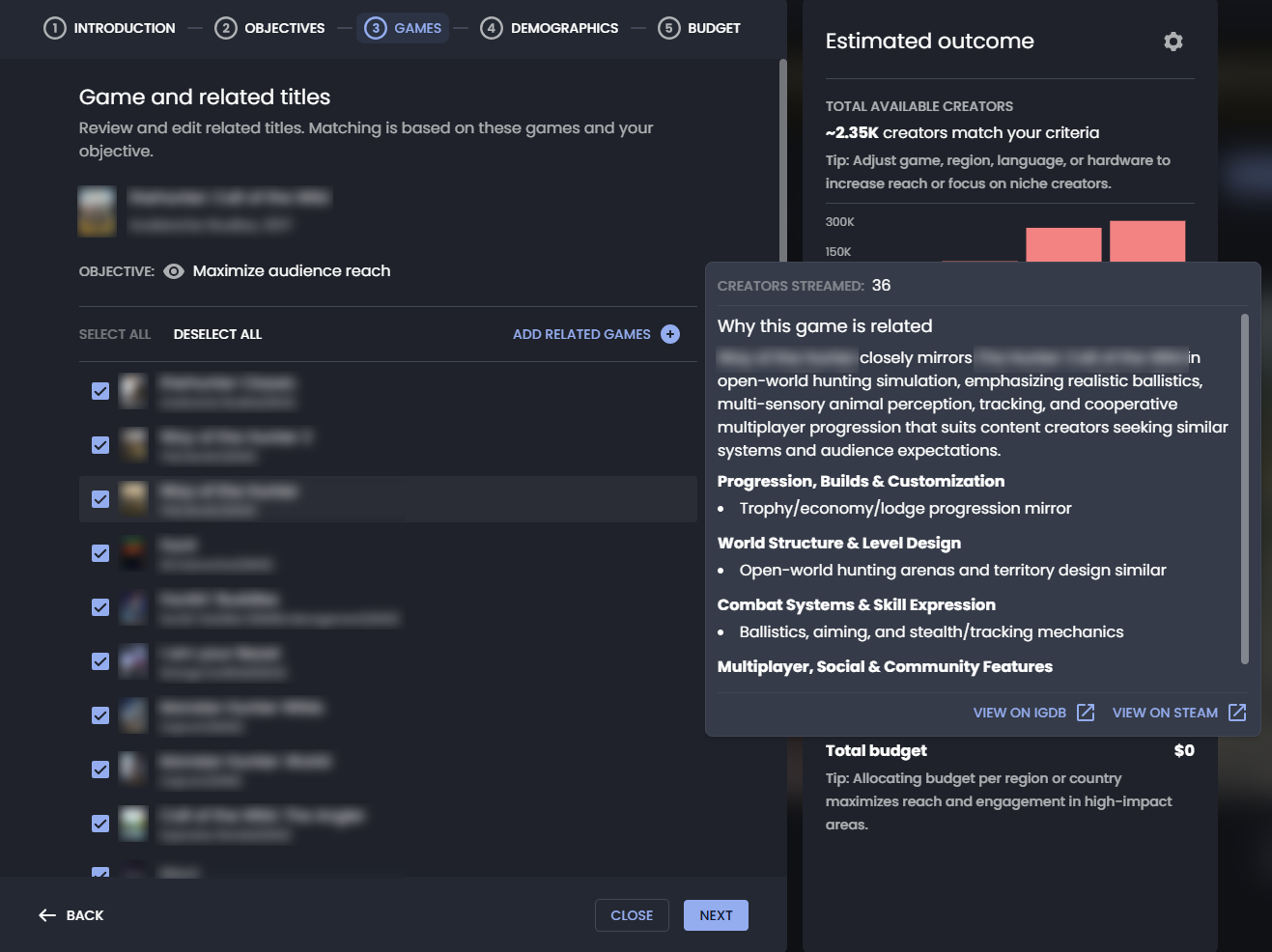
- Check the related games. Our AI looks at your game’s gameplay, progression, multiplayer features and world, and finds the games that really are similar, not just ones with the same genre tag. For each game it tells you why it’s on the list. You can remove games or add your own.
- Choose who you want to reach. Regions and countries, stream language, and creator size from nano to macro.
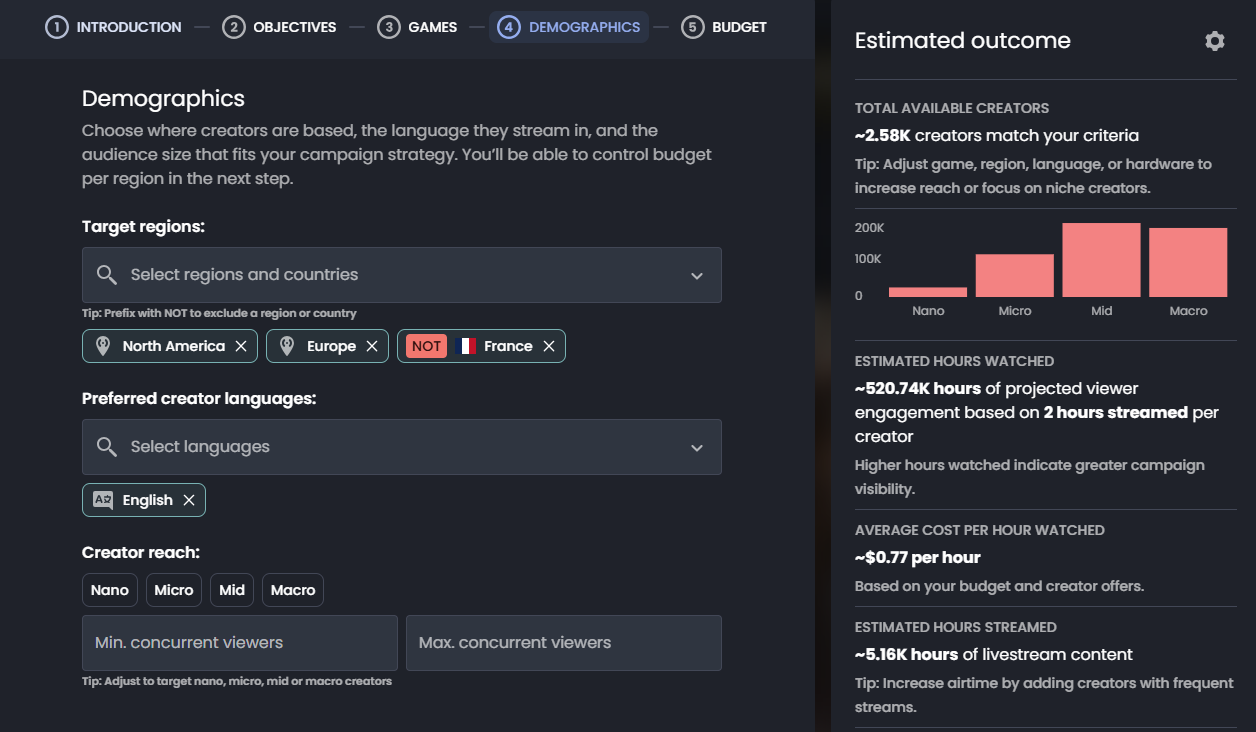
- Set your budget. Total budget, budget per region if you want it, the most you’ll pay per hour watched, and how long each creator should stream.
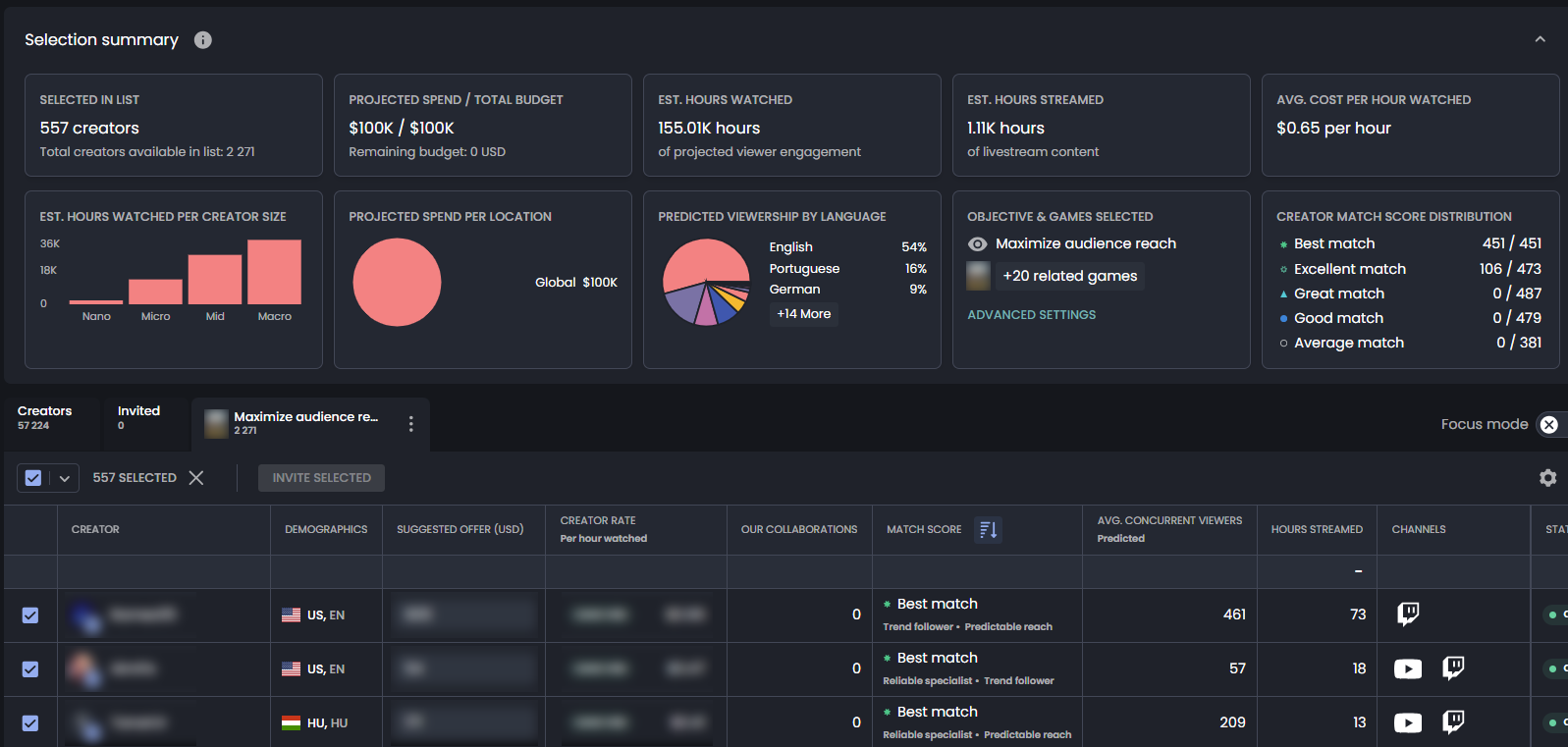
Then you get your list. While you go through the steps, a panel on the right shows how many creators match, the expected reach and the average cost, and it updates with every choice you make.
What happens behind the list
For every creator who has played one of the related games, we start with one question: when they played a game like yours, did their viewers stay, grow or drop? We look at the last two years and the last six months, to find both the creators who are reliable over time and the ones who are growing right now.
Then we rank them against your goal, your budget and the audience you picked. Every creator gets a match score, a short label like “reliable specialist” or “trend follower”, and a suggested offer you can adjust before you send it.
All of this takes about two minutes. Doing it by hand would take hours per creator.
Across two years of campaigns on Lurkit, studios and publishers have on average got about twice the media value for their budget, compared with the results they’ve shared with us from their own in-house campaigns and other providers. Much of that comes from being good at finding the right creators. Matchmaking takes that to the next level.
Fair for both sides
Creators on Lurkit set their own price range, and matchmaking works within it. We take your budget, the creator’s range and regional pricing into account, so the offer makes sense for both sides. The goal isn’t the cheapest creator. It’s the right one.
What this means
Someone new on your team, without years of creator marketing behind them, can now build a list as good as one a senior would spend days on. And the senior gets those days back for the work that really needs experience: the relationships, the creative brief and the follow-up.
We think relevance and pricing should be handled by data and tech, in a way that’s fair to studios and creators alike. Studios and publishers can then spend their time on the creative side of a campaign, and creators on making good content.
What’s next
Today matchmaking works on livestreams. Next year we’re adding video and shorts. Before that, next month, we’ll write about Lurkit 2.0, the new foundation every campaign on Lurkit runs on, and how matchmaking fits into it.
Sam Niskanen, CEO at Lurkit